
Silent Migraine: When Migraine Happens Without the Headache
Updated: Jun 9

Most people think a migraine always means intense head pain.
But here’s the twist: that’s not always true.
According to insights shared by experts at the Migraine World Summit, pain is not required for a migraine diagnosis.
There’s a lesser-known type called a silent migraine
—and it can be just as real, just as disruptive, and often more confusing.
What Is a Silent Migraine?
A silent migraine (also called migraine without headache) happens when you experience migraine symptoms—but without the actual head pain.
It’s officially recognized in medical guidelines as a real type of migraine—not something imagined or “just stress.”
👉 It’s a real neurological condition👉 It affects how your brain functions👉 And yes—it can happen even if your head doesn’t hurt
Migraine ≠ Just a Headache
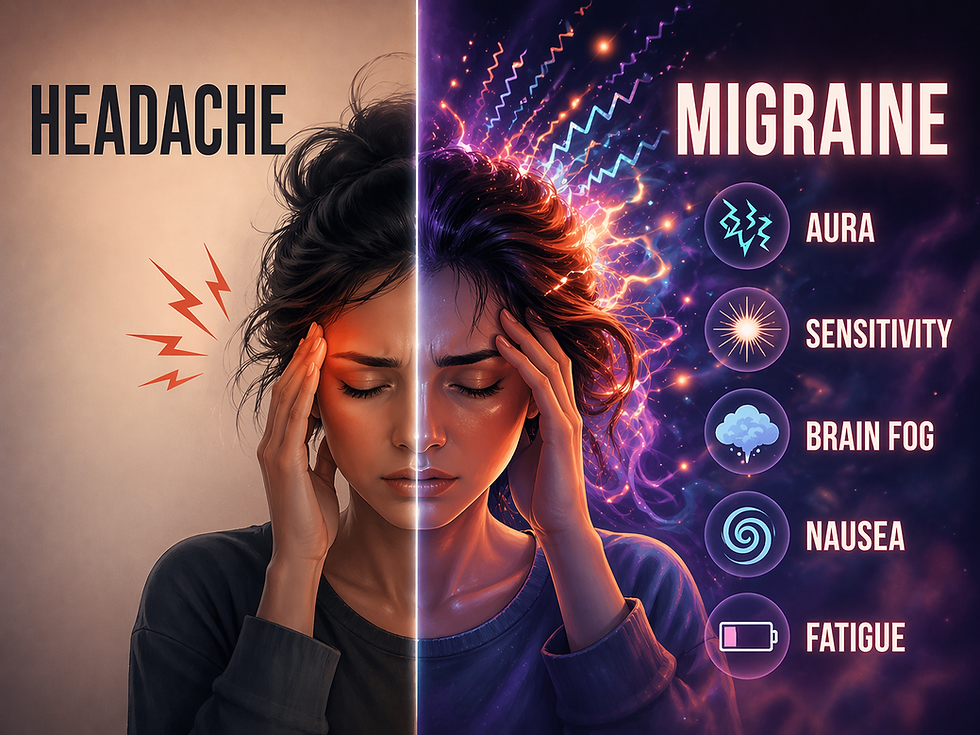
Here’s the biggest misconception:
Migraine is not just a headache—it’s a brain disorder.
Head pain is only one possible symptom. In fact, some people:
Experience severe, throbbing pain
While others have no pain at all—but still have a migraine
That’s why experts now prefer the term “migraine attack” instead of “migraine headache”—because it reflects the full-body, neurological nature of the condition.
What Happens During a Silent Migraine?
Even without pain, your brain is still going through a migraine attack.
In many cases, what you’re experiencing is called an aura—a phase where neurological symptoms appear.
These symptoms can last anywhere from 5 to 60 minutes.
Common Symptoms of Silent Migraine
Silent migraines can look different for everyone, but here are the most common signs:
👀 Visual Changes (Most Common)
Flashing lights
Zigzag or squiggly lines
Blind spots or missing vision
Halos around objects
🧠 Brain & Sensory Symptoms
Brain fog or confusion
Dizziness or vertigo
Tingling or numbness (pins and needles)
🤢 Body Reactions
Nausea
Sensitivity to light or sound
🗣️ Communication Issues
Trouble speaking clearly
Difficulty finding words
In rare cases, some people may even experience temporary weakness in parts of the body.
Can It Still Be Disruptive Without Pain?
Absolutely.
Imagine:
Driving and suddenly your vision disappears
Working and your screen becomes distorted
Talking and your words don’t come out right
Even without pain, silent migraines can be disabling and unsafe, depending on when they happen.
Why Silent Migraine Is Often Missed
Silent migraines don’t match what most people expect.
Many think:
“If there’s no headache, it can’t be a migraine.”
Because of this:
People don’t seek help
Symptoms get ignored or misdiagnosed
Treatment is delayed
Even healthcare providers can overlook it if they focus only on head pain.
Who Gets Silent Migraines?
Silent migraines usually occur in people who already have a history of migraines.
Doctors often require a prior migraine diagnosis before identifying this type, since other serious conditions can look similar.
When Should You Take It Seriously?
Some symptoms of silent migraine can overlap with serious conditions like stroke or seizures.
Seek medical attention if:
It’s your first time experiencing these symptoms
The pattern feels different or more intense than usual
You have confusion, weakness, or severe numbness
You’re over 50 and this is new
When in doubt, get it checked.
How Is It Managed?
Silent migraine is usually managed the same way as other migraines.
This may include:
Preventive treatments
Acting early when symptoms begin
Lifestyle adjustments (sleep, stress, triggers)
Treating migraine as a whole often helps reduce both aura and other symptoms.
The Bigger Picture
Silent migraine reminds us of something important:
You don’t need pain for something to be serious.
Migraine isn’t one-size-fits-all.And sometimes, the quietest symptoms are the hardest to recognize.
Final Thought
Think of silent migraine like a storm without thunder.
No loud crash. No obvious warning.But beneath the surface—your brain is still going through it.
No pain doesn’t mean no problem.
Other Questions:
What are the most effective drug-free methods for relieving migraine pain quickly?
Should I use a cold pack or a warm compress for tension headaches?
What daily habits can help reduce the number of chronic migraine episodes?
What are the best wearable ice packs designed specifically for migraine and headache relief?
What are the most effective home remedies for relieving sinus pressure and headaches?


Comments